
Professor Dongjin Lee of Seoul National University School of Law Visits Renmin University of China Law School for Academic Exchanges
time:2026-11-10From October 28 to 29, 2026, Professor Dongjin Lee (이동진) of Seoul National University Law School visited Renmin University of China Law School. He engaged in in‑depth academic exchanges with faculty members and students from the Renmin Law and Technology Institute, Renmin University of China and the Center for Civil and Commercial Law of Renmin University of China.
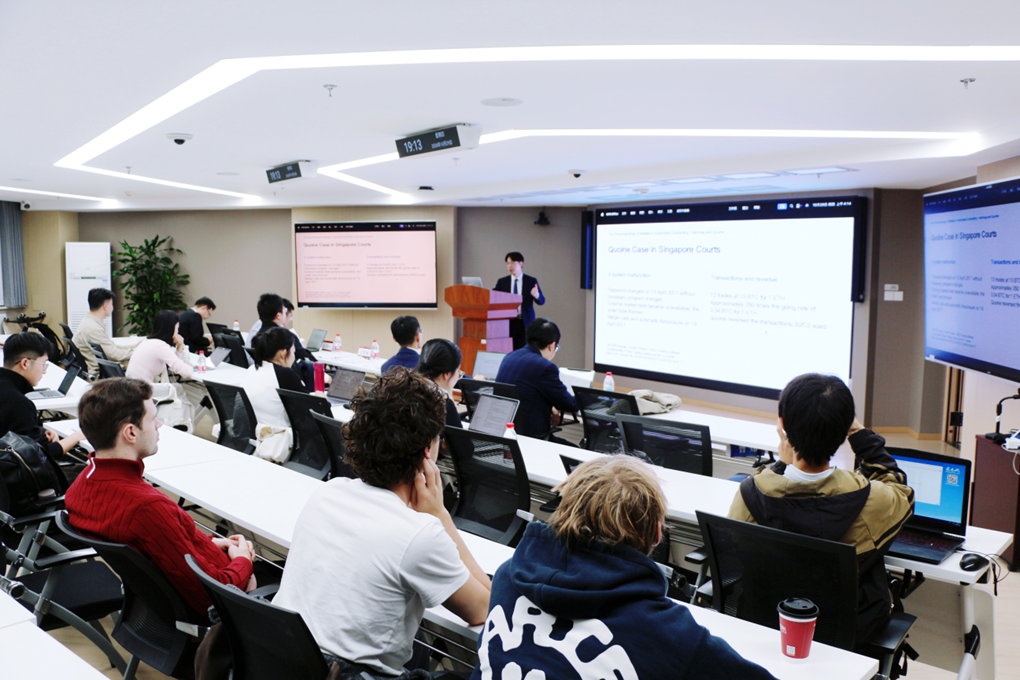
On October 29, Professor Lee delivered a lecture entitled "Changes in Civil Law in the Digital Age" in Meeting Room 708 of the Mingde Law Building. The lecture focused on the doctrine of mistake in declarations of intention in the context of automated contracting. It was jointly supported by Renmin University of China Law School, the Renmin Law and Technology Institute, and the Center for Civil and Commercial Law of Renmin University of China. Professor Yang Dong, Dean of Renmin University of China Law School attended the event and delivered opening remarks. Professor Xiong Bingwan moderated the lecture. Associate Professor Wu Zhicheng, Assistant Professors Bao Dingyurui and Chen Zheli together with other faculty members, participated in the event and engaged in in-depth discussions with Professor Lee on developments in civil and commercial law in the digital age and emerging legal issues concerning the application of artificial intelligence.
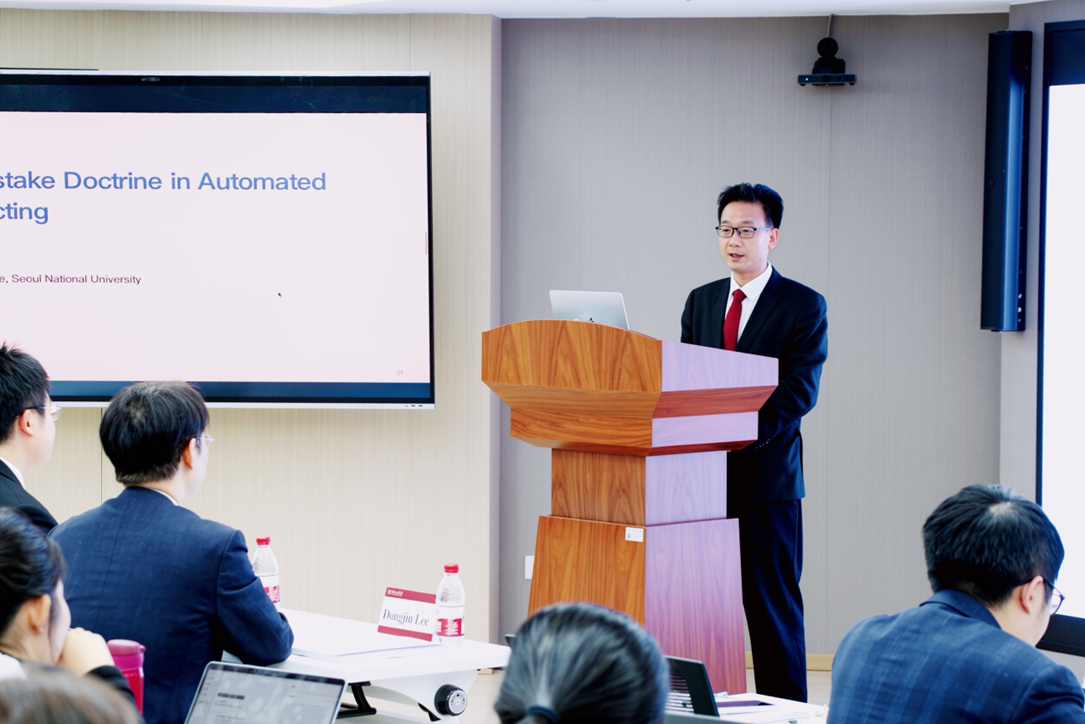
Dean Yang Dong extended a warm welcome to Professor Lee on behalf of the Law School. He spoke highly of Seoul National University School of Law's distinguished academic tradition and achievements in legal education. He also reviewed the longstanding cooperation and close friendship between the two law schools, fostered through initiatives such as the Young Jurists Academic Conference. He noted that carrying forward this tradition and further strengthening bilateral cooperation would help broaden perspectives in comparative legal research and promote the joint advancement of legal education and scholarship. According to Dean Yang, new technologies including artificial intelligence are profoundly transforming social interactions and transactional patterns. How the rule of law responds to technological change constitutes a key issue confronting the global legal community. He commended the academic themes of Professor Dongjin Lee’s current visit, and expressed the hope that this visit would serve as an opportunity to lift bilateral cooperation in legal research and talent training to new heights.
In his lecture, Professor Lee drew on representative cases from South Korea and Singapore to analyze challenges posed by automated contracting to traditional mistake doctrine. He pointed out that in algorithm-driven transactions, parties often only pre-set models or parameters and can hardly foresee the full contents of a specific transaction. If mistake, gross negligence and malicious exploitation of mistake are still determined centering on human subjective cognition, remedies for mistake may be excessively restricted. This would impose all relevant risks on the algorithm user and undermine the function of the mistake regime to balance the interests of contracting parties. For scenarios such as input errors, parameter-setting mistakes and system malfunctions, attention should be paid to the actual transaction outcome and risk allocation, and the applicability of traditional classifications in automated contracting ought to be re-examined.
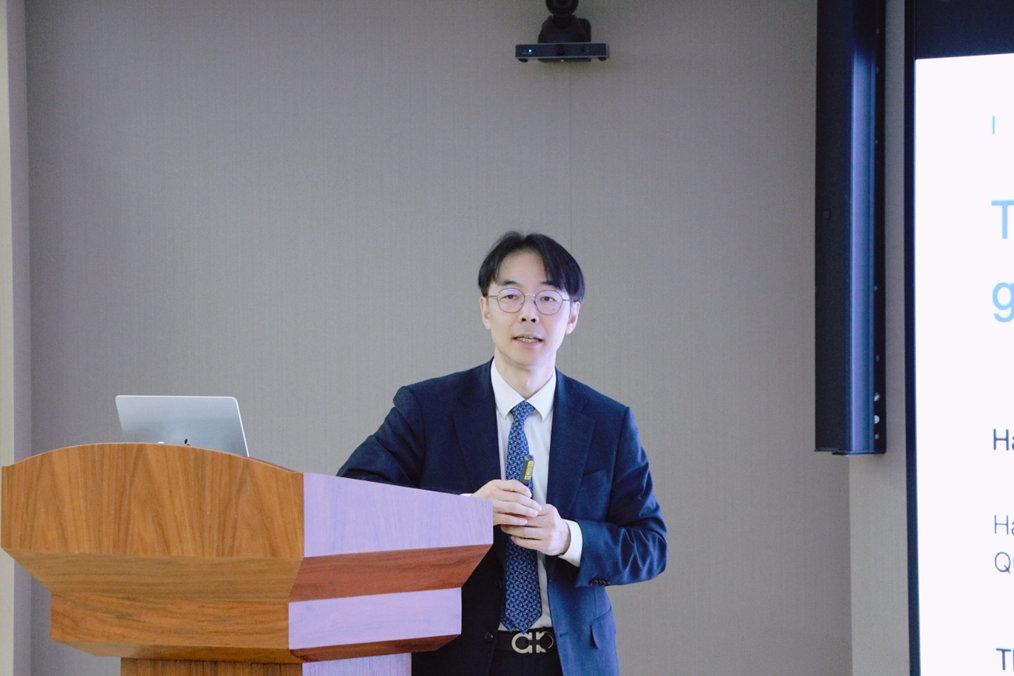
Professor Lee argued that the reasonable expectations of both contracting parties should serve as the benchmark to assess whether transaction results fall well beyond the scope of reasonable foreseeability. Elements such as gross negligence and malicious exploitation of mistake ought to be interpreted within an interest‑balancing framework. Adopting algorithms does not mean a party shall bear all risks. Since algorithms lack subjective awareness, they should not automatically bar remedies for mistake. For objectively substantially imbalanced transactions, remedies ought to remain available while respecting reasonable risk‑taking, so as to reconcile transaction security and substantive fairness. Integrating case analyses, comparative‑law investigations and institutional rationales, the presentation offered insights into pathways for contract‑law adaptation in the digital era.
During the comment and discussion session, Associate Professor Wu Zhicheng commented on difficulties in identifying risk‑allocation clauses and reasonable expectations, drawing upon mistake‑remedy regimes in China and South Korea. Professor Lee emphasized the necessity to distinguish the intent to conclude a contract from the scope of assumed risks, and to judge reasonable expectations against transaction purposes. Assistant Professor Bao Dingyurui compared regulatory differences between financial‑market transactions and ordinary private transactions, and raised questions concerning disclosure obligations for AI‑enabled agents. Professor Lee introduced relevant rules of the Korea Exchange, and remarked that disclosure obligations require further research in light of agent types and degrees of algorithmic intervention. In the open discussion, Assistant Professor Chen Zheli shared perspectives drawing on Japanese civil law on the relationship between the review of mistake and gross negligence, as well as mistake remedies for smart contracts. Professor Lee held that mistake should in principle be established prior to examining gross negligence. It is necessary to differentiate the code execution of smart contracts from the underlying contractual relationships, and explore off‑chain remedies while respecting the finality of transactions.
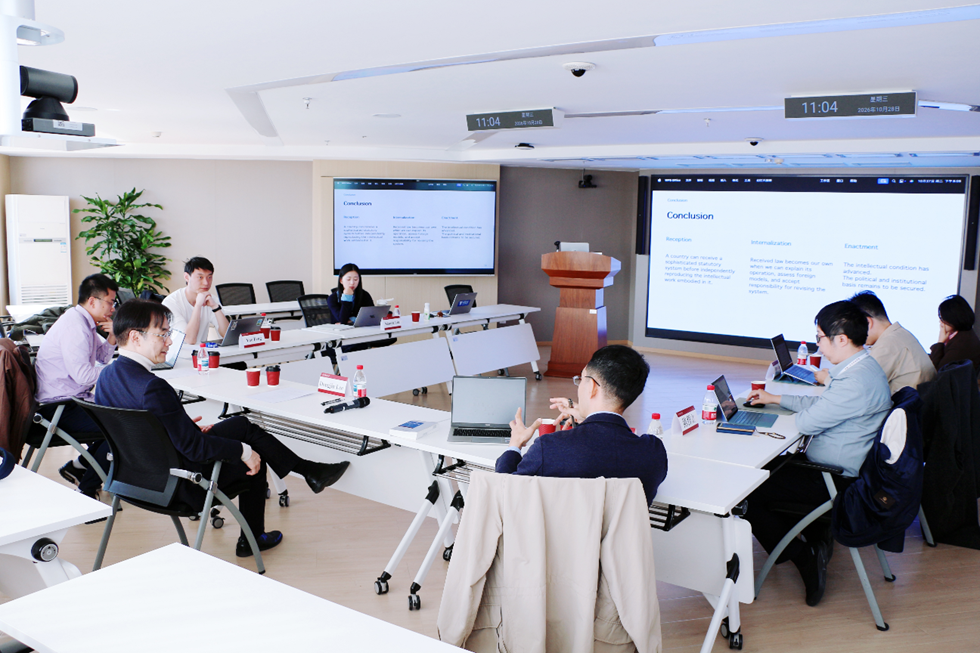
During his visit, on October 28, Professor Lee also held academic dialogue with scholar Xiong Bingwan, Sun Jingzhou, Bao Dingyurui, Chen Zheli and multiple PhD candidates on Genealogy and Recent Revisions of the Korean Civil Code. From the perspective of legal reception, he outlined the formation and evolution of the Korean Civil Code and introduced major topics in its recent revision. Participating faculty and students exchanged views on Doctrinal transplantation and institutional localization, the relationship between the civil code and special statutes, and how civil‑law reforms respond to practical demands. Comparative insights across jurisdictions deepened participants’ understanding of the inheritance and development of East Asian civil‑law institutions.
Ranging from comparative inquiries into civil‑law traditions to institutional responses to technological disruption, this round of academic exchanges reflected shared academic concerns, enhanced mutual understanding, and further consolidated foundations for sustained academic ties and high‑level practical cooperation between the two law schools.