
Lecture Review|Yun-chien Chang: Complex Systems Theory: Taking Trust Law and Intellectual Property Law as Examples
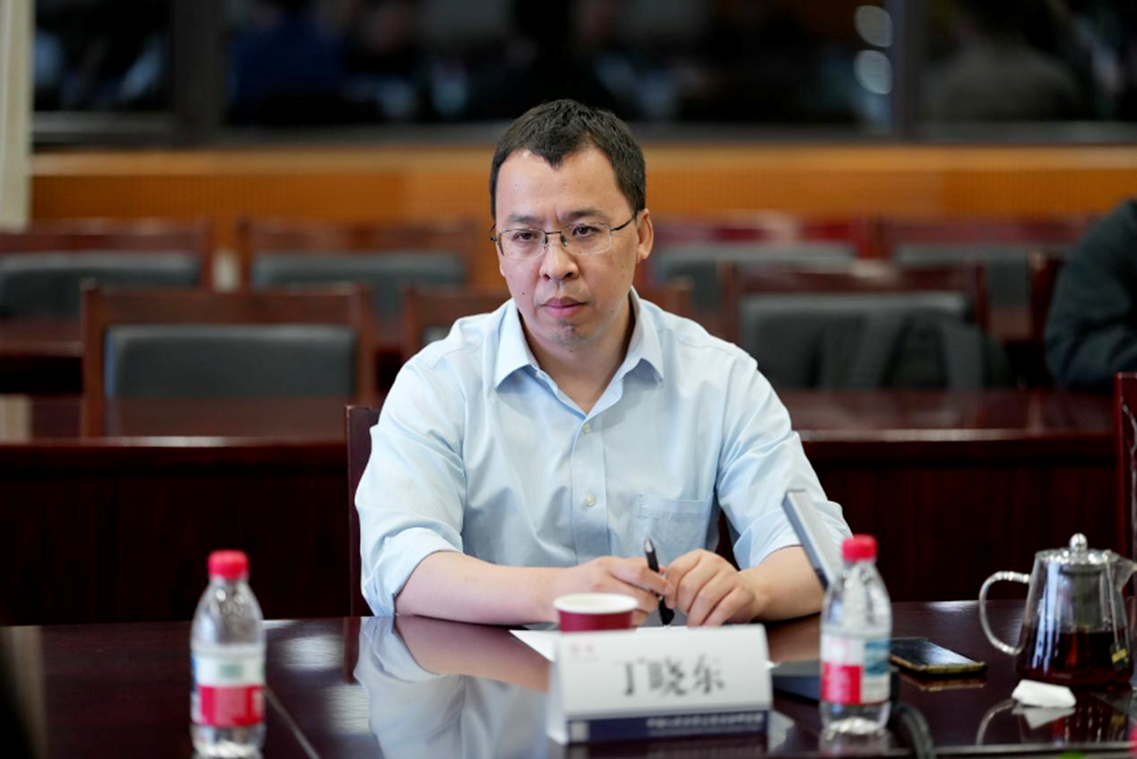
time:2026-08-11On the evening of July 10, 2026, the academic lecture entitled Complex Systems Theory: Taking Trust Law and Intellectual Property Law as Examples, hosted by the Law School and the Renmin Law and Technology Institute of Renmin University of China, was successfully held in Conference Room 601, Mingde Law Building. This lecture featured Professor Yun-chien Chang, Clarke Professor of Law and Director of the Clarke Program in East Asian Law & Culture at Cornell Law School, as the keynote speaker. Professor Ding Xiaodong, Vice‑Dean of the Renmin University of China Law School, presided over the event. Professors Wan Yong, Zhang Jiyu (Executive Director of the Renmin Law and Technology Institute), Associate Professors Wu Zhicheng and Peng Yali, and Assistant Professor Ruan Shenyu, all affiliated with the Renmin University of China Law School, served as discussants.
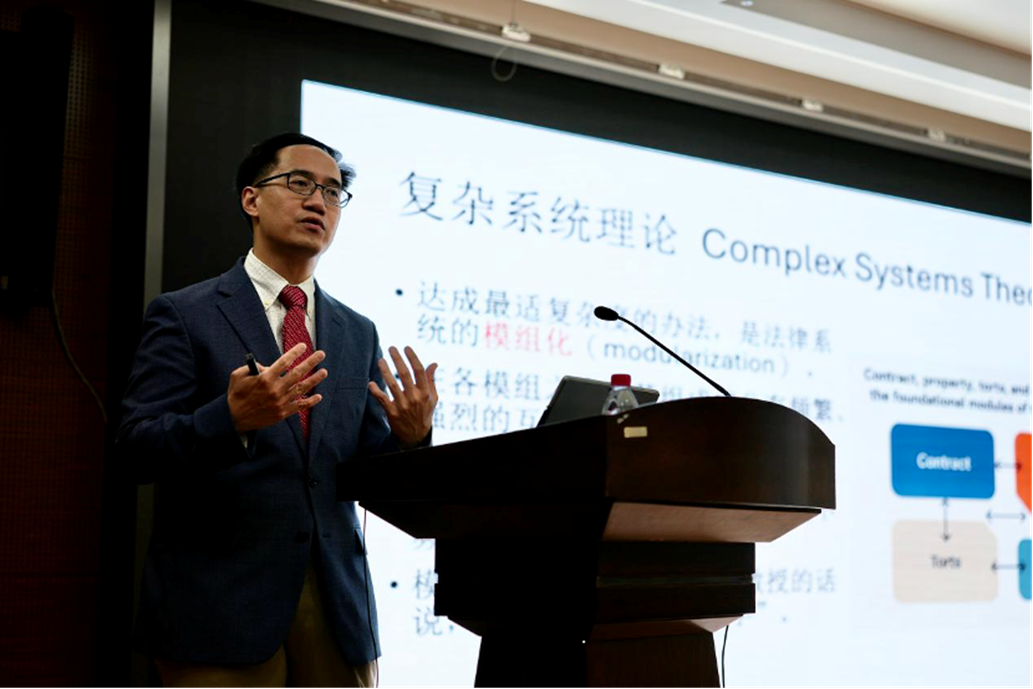
Professor Yun-chien Chang, Clarke Professor of Law and Director of the East Asian Legal Studies Center at Cornell University
At the opening of the lecture, Professor Ding Xiaodong briefly introduced the academic background of Professor Yun-chien Chang. Holding a Doctor of Juridical Science (J.S.D.) degree from New York University School of Law, Professor Yun-chien Chang currently serves as Co‑Editor‑in‑Chief of Journal of Empirical Legal Studies (JELS, SSCI‑indexed). He also acts as an Associate Reporter for the Restatement (Fourth) of Property, President of the Asian Law and Economics Association, and has recently been elected to the Board of Directors of the American Law and Economics Association. His research covers property law, trust law and other fields. He is the author of more than ten Chinese‑ and English‑language monographs, including Economic Analysis of Property Law and Twenty Lectures on the Methodology of Law and Economics, as well as over one hundred journal articles.
Professor Ding Xiaodong noted that this lecture focused on core issues concerning institutional understanding, spanned the intersecting fields of trust law and intellectual property law, and bore profound theoretical value.
Keynote Speech:
Professor Yun-chien Chang opened by raising the fundamental question of “what constitutes a theory”. He pointed out that legal training often lacks theoretical thinking, and theories can be divided into “descriptive theory” (explaining and predicting phenomena) and “normative theory” (deriving concrete normative positions from abstract values). He then introduced complex systems theory. Drawing on the views of Henry Smith from Yale University, he contended that the operation of the legal system pursues organized complexity, whose key lies in modularity: the legal system consists of modules that interact significantly yet infrequently with one another. On this basis, he put forward a descriptive proposition: when legislators and interpreters introduce new institutions, they tend to adopt approaches that minimize systemic costs so as to maintain the stability of existing modules.
To move beyond the tradition of German‑style civil law, Yun-chien Chang proposed the “three axes of private law” built upon the Hohfeld framework: the scope, conditions and duration of persons bound by a right, the degree of exclusivity, and the mediating object of rights (types of objects). Applying this framework to analyse the right of a trust beneficiary, he argued that civil‑law jurisdictions misinterpret such right as “dual ownership” and accordingly restructure it into a contractual relationship. Nevertheless, under relevant provisions of the Trust Law of China, the effect exercisable by a beneficiary against specific third‑party persons goes beyond mere privity of contract, such that the beneficiary’s right under a trust may be characterized as a “quasi‑property right”.
In the field of intellectual property law, Professor Yun-chien Chang took patent licensing and copyright licensing as examples to explore the legal effect of license rights upon the assignment of underlying rights. He emphasized that although the Hohfeld framework functions merely as a conceptual tool, it enables researchers to clearly define the nature of various rights within a unified analytical system, thereby mitigating the disruptive impact of trusts and intellectual property rights on traditional civil‑law modules.
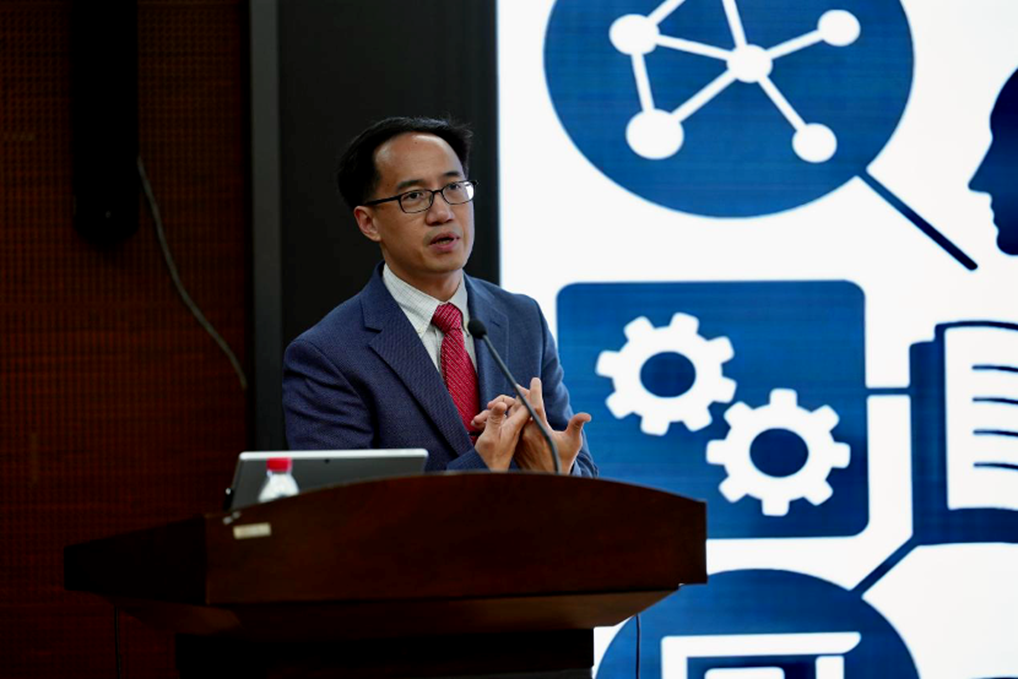
Discussant Comments:
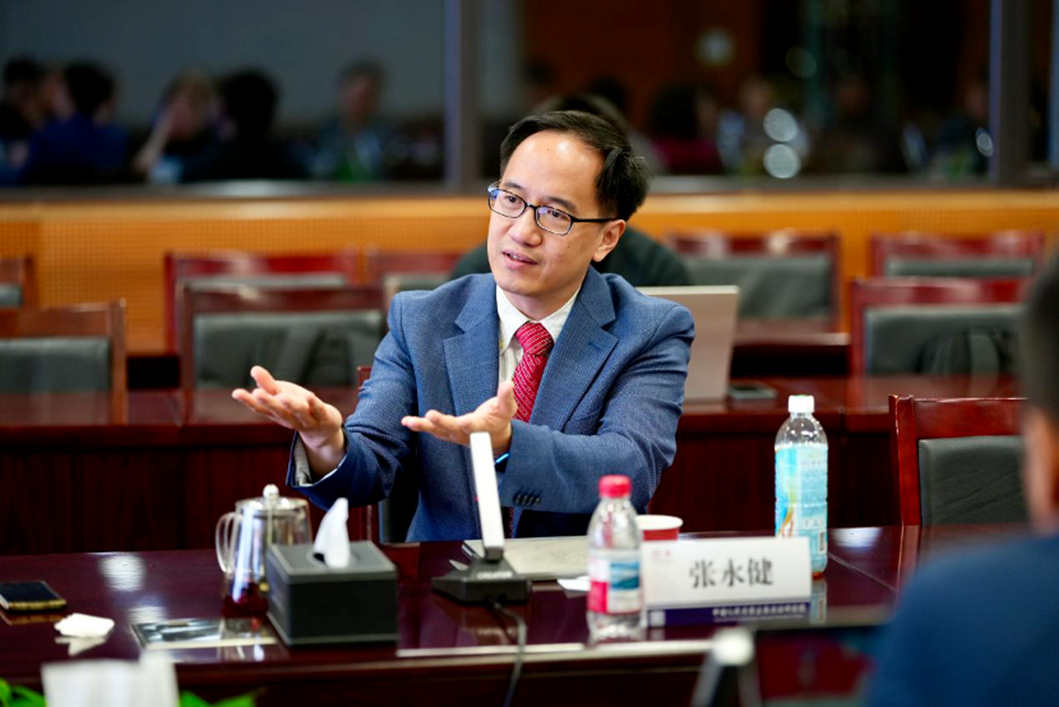
The following discussants drew upon Professor Yun-chien Chang’s analytical framework to offer comments and raise follow‑up questions concerning, inter alia, the controversy over filing requirements for patent licenses, the timing for modularizing data‑related interests, the translation of the term “title” and a comparison between different rights of revocation, the methodology for deriving the analytical axes, the German‑law concept of “Zugehörigkeit” (attribution), and the right of reclamation in bankruptcy proceedings.
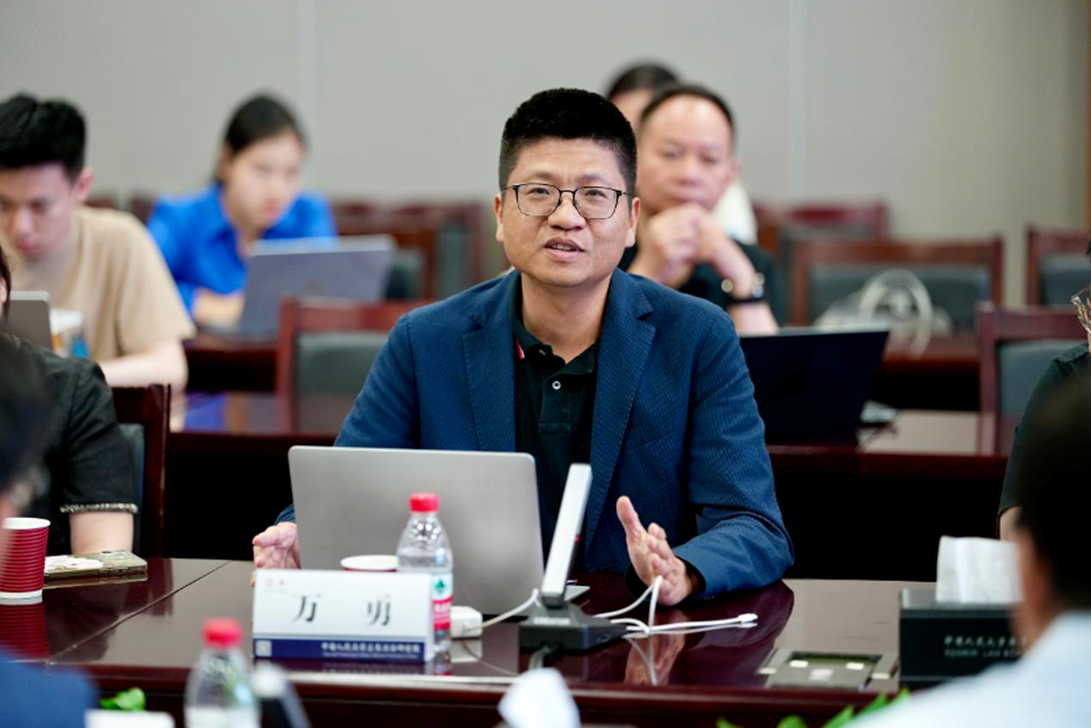
Professor Wan Yong,Vice‑Dean of the Renmin University of China LawSchool
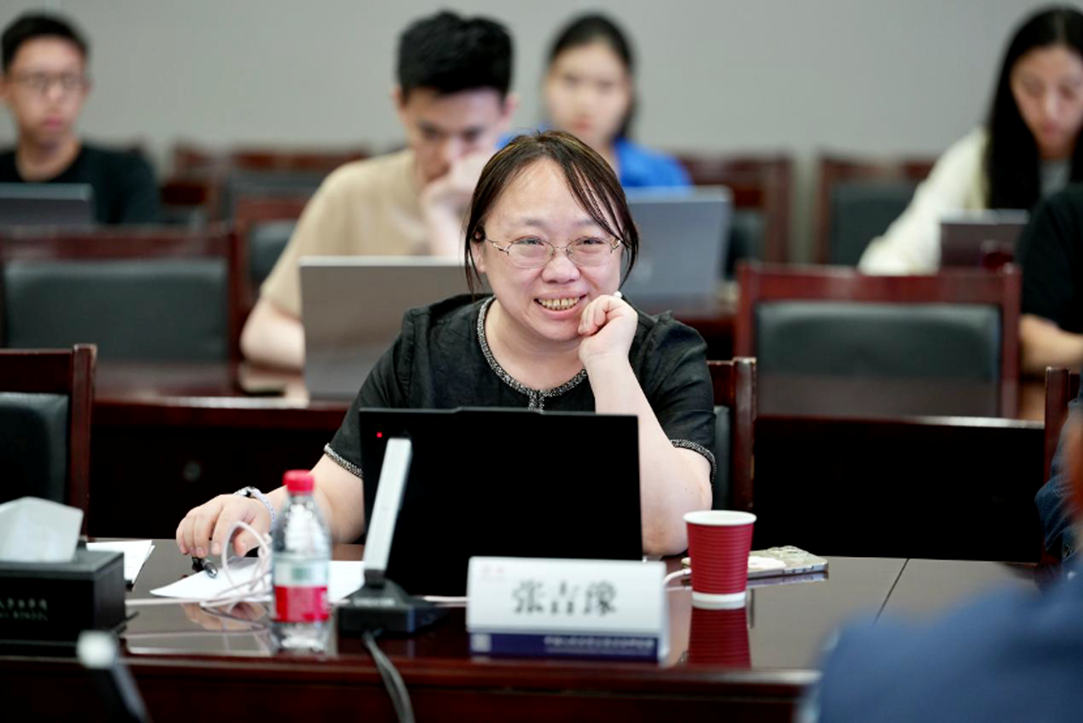
Professor Zhang Jiyu, Executive Director of the Renmin Law and Technology Institute, Renmin University of China

Associate Professor Wu Zhicheng, Renmin University of China Law School

Associate Professor Peng Yali, Renmin University of China Law School

Assistant Professor Ruan Shenyu, Renmin University of China Law School
Q&A Session and Responses:
During the open‑floor Q&A segment, a student from Tsinghua University focused on the connection between complex systems theory and Hansmann’s “organizational necessity” theory, inquiring whether systemic costs arising from the transplantation of trust institutions could be reduced from an organizational dimension. Another student raised a question regarding controversies over module migration: whether codification can naturally resolve issues of module application, or will it instead give rise to new systemic conflicts.
Professor Ding Xiaodong, the moderator, also joined the academic discussion in his closing summary. He proposed whether new analytical axes such as “scale” and “degree of standardization” could be added, and pointed out the problem of institutional fit with practical scenarios in modern society.
Professor Yun-chien Chang offered consolidated responses to the foregoing questions.
Closing Remarks and Acknowledgements:
Professor Ding Xiaodong stated in his closing remarks that Professor Yun-chien Chang’s lecture vividly illustrated how to strike a balance between highly concrete institutional analysis and the pursuit of general theories. He encouraged faculty and students present to pursue both the power of abstraction and parsimony in theory, as well as intuitive awareness of concrete scenarios and institutions — qualities that define outstanding legal scholarship. Finally, he extended sincere gratitude to Professor Yun-chien Chang for his illuminating keynote speech and to all discussants for their in‑depth comments, and looked forward to more academic exchanges in the future. The lecture came to a successful conclusion with a group photograph taken by all participating faculty and students.