
Lecture Review | Dr. Dariusz Kasprzycki of Jagiellonian University Delivers Lecture on “Patents in Biotechnology”
time:2023-01-13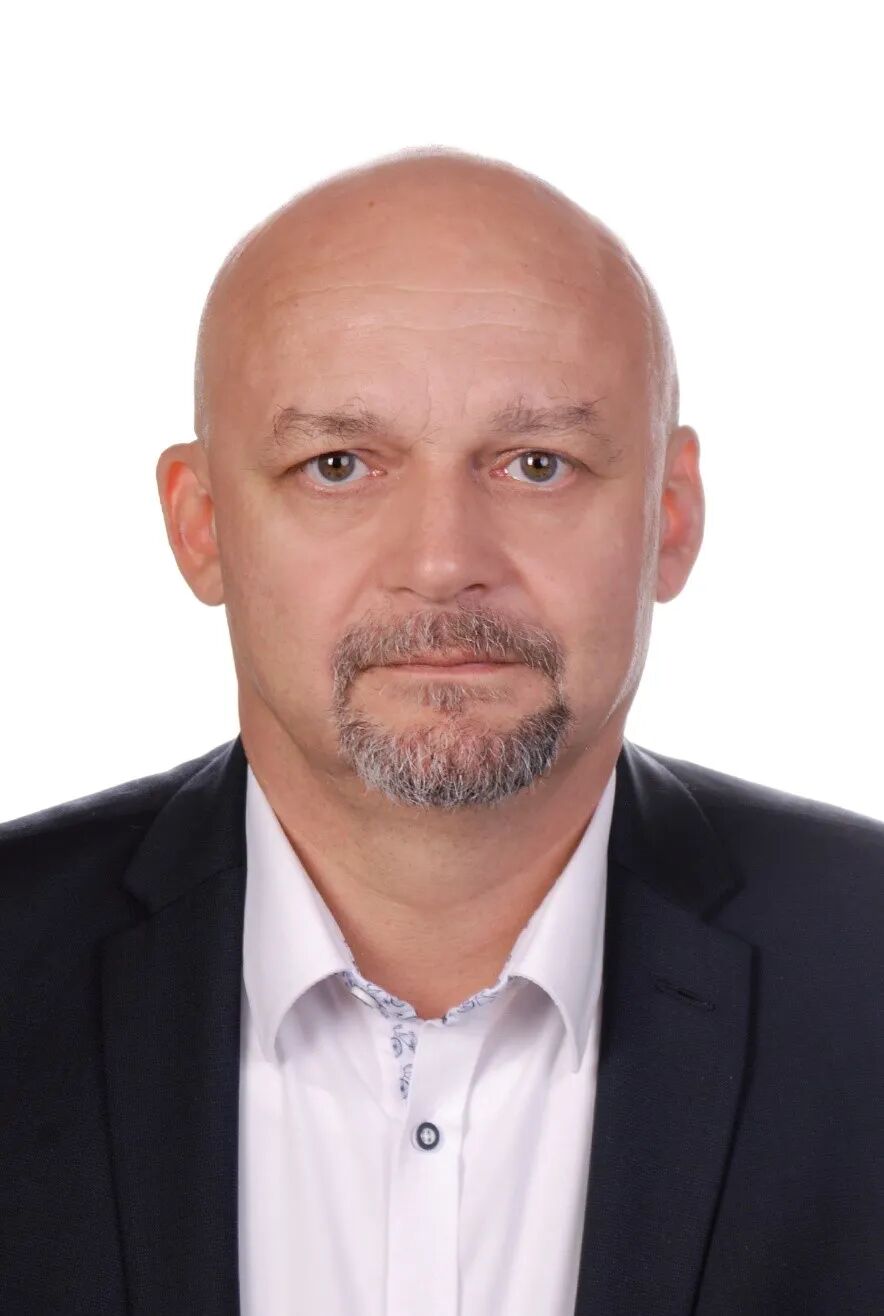
Dr. Dariusz Kasprzycki, Researcher at the Chair of Intellectual Property Law, Faculty of Law and Administration, Jagiellonian University, Poland
On the afternoon of December 14, 2022, at the invitation of the Renmin Law and Technology Institute of the Law School at Renmin University of China, Dr. Dariusz Kasprzycki delivered a lecture on the theme "Patents in the Biotechnology Field" and conducted online academic exchanges with faculty and students of the school. The lecture focused primarily on an overview from a European perspective and issues related to gene-related inventions and patent scope. Participants in the lecture included Professor Guo He of the Law School at Renmin University of China; Associate Professor Zhang Jiyu, Executive Dean of the Renmin Law and Technology Institute; Peng Yaojin, Zhiyi Researcher at the Institute of Zoology, Chinese Academy of Sciences and the Beijing Institute for Stem Cell and Regenerative Medicine, Director of the Science and Ethics Research Center at the Beijing Institute for Stem Cell and Regenerative Medicine, and Director of the Business and Legal Affairs Department; and Wang Yukai, Assistant Professor at the Shanghai International College of Intellectual Property of Tongji University.
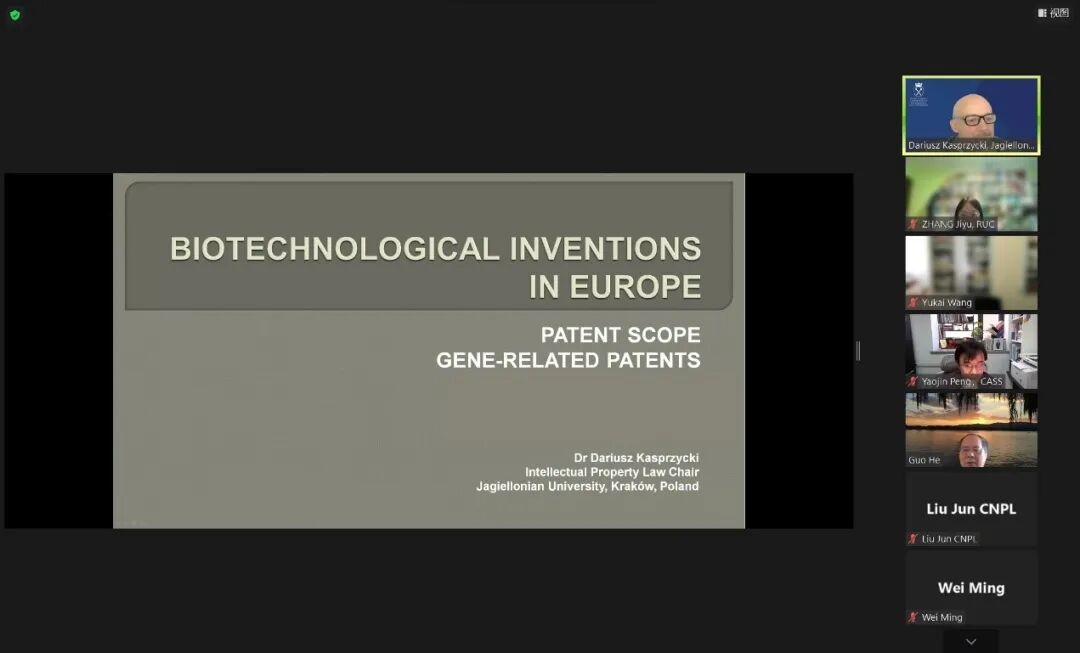
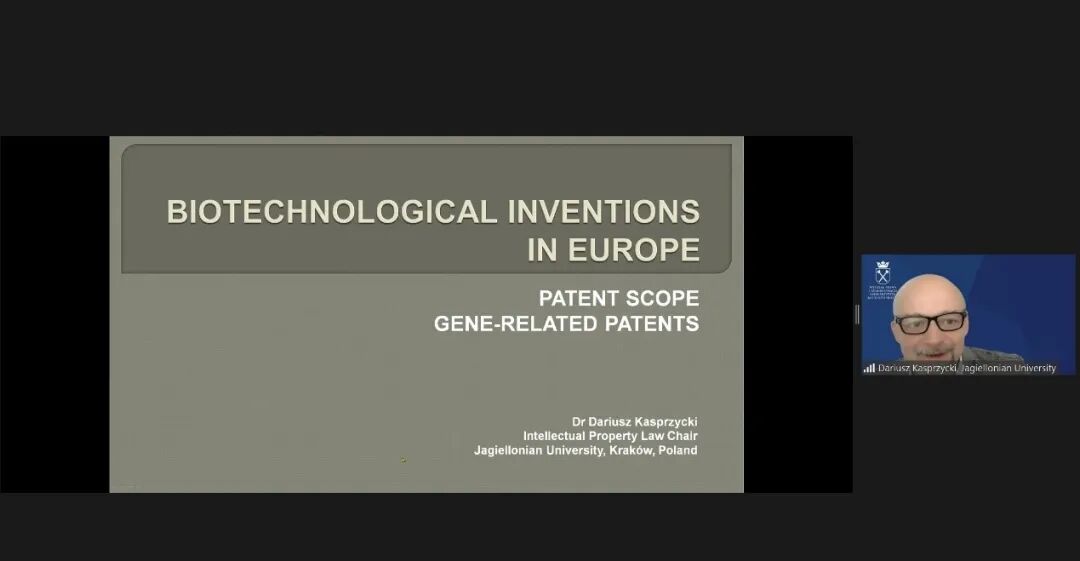
First, Dr. Dariusz Kasprzycki, after briefly reviewing the current state of biotechnology patent practice worldwide, introduced the patentability of biotechnological inventions in Europe. Dr. Kasprzycki pointed out that the core controversial issue regarding the patentability of biotechnological inventions is whether biological materials can be protected as "products" under patent law. Although there had been disputes in judicial practice, the EU's 1998 Directive on the Legal Protection of Biotechnological Inventions (hereinafter referred to as the "Directive") provided a legal basis for the patentability of biotechnological inventions. It clarified the definition of biological materials and specified that patent applications for biological materials should still meet all the requirements for patentability. The Directive stipulates that, in principle, all biotechnological inventions are patentable, but certain subject matters (such as methods for cloning human beings, methods for modifying the germ line genetic identity of human beings, and uses of human embryos for industrial or commercial purposes) are excluded. Dr. Kasprzycki introduced these exceptions one by one. In addition, the Directive indicates that the mere isolation of a biological material from its natural environment for the first time can render it eligible as a subject matter for patent protection. It is worth noting that the U.S. Myriad case held that naturally occurring DNA in nature is a discovery rather than an invention, and therefore is not patent-eligible, whereas artificially extracted cDNA, being different from natural DNA, can be protected as a patentable subject matter. Dr. Kasprzycki emphasized that the question of whether biological materials should be classified as inventions or discoveries remains controversial in academic circles.
Subsequently, the lecture focused on the patentability of gene-related inventions. The Directive states that the function of a gene must be explicitly set forth at the time of filing the patent application, and genes without a specified function cannot be protected by patents due to a lack of industrial applicability. On this point, Dr. Kasprzycki raised two contentious issues: Is patent protection limited only to the gene functions recited in the claims? And if such functions are not actually achieved, does the patent still provide protection? In response, Dr. Kasprzycki argued that when the functions described in the patent are not achieved, even the use of the patented product should not constitute infringement, so as to prevent overprotection of biological material patents. Similarly, he believed that protection for gene patents should be confined to the functions recited in the claims. Afterwards, Dr. Kasprzycki also briefly discussed other patent law issues in the biotechnology field.
 Peng Yao, Associate Researcher at the Institute of Zoology, Chinese Academy of Sciences, "Zhiyi" Researcher at the Beijing Institute for Stem Cell and Regenerative Medicine, and Director of the Science and Technology Ethics Research Center
 Wang Yukai, Assistant Professor of the Shanghai International College of Intellectual Property, Tongji University.