
Forum Review | The 478th Civil and Commercial Law Frontier Forum & the 2nd Future Rule of Law Forum
time:2019-01-14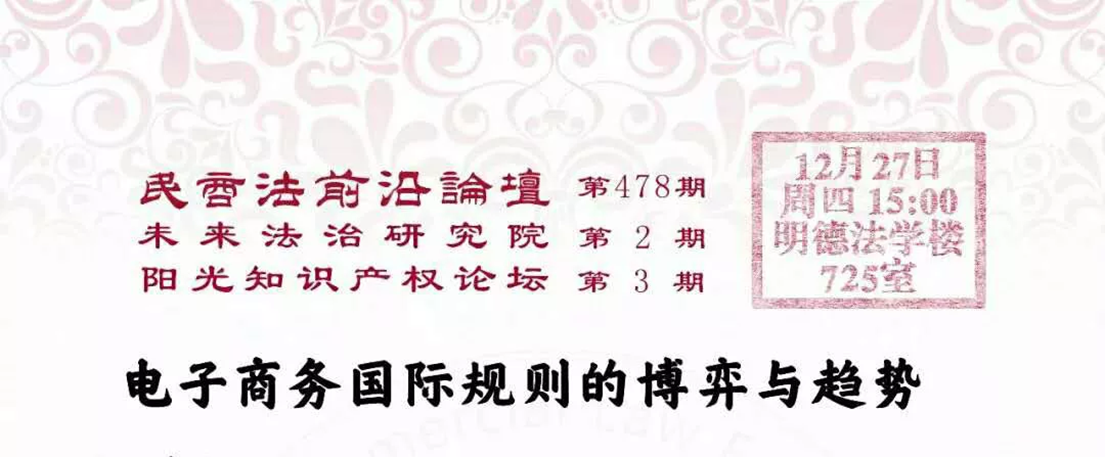
The 478th Civil and Commercial Law Frontier Forum, the 2nd Future Rule of Law Forum, and the 3rd Sunshine Intellectual Property Forum themed “Games and Trends of International E-Commerce Rules” was successfully held in Conference Room 725, Mingde Law Building, Renmin University of China Law School, at 15:00 on December 27, 2018. Co-hosted by the Center for Global Cyberspace Governance of the Renmin Law and Technology Institute of Renmin University of China and co-organized by the Beijing Sunshine Intellectual Property and Legal Development Foundation.
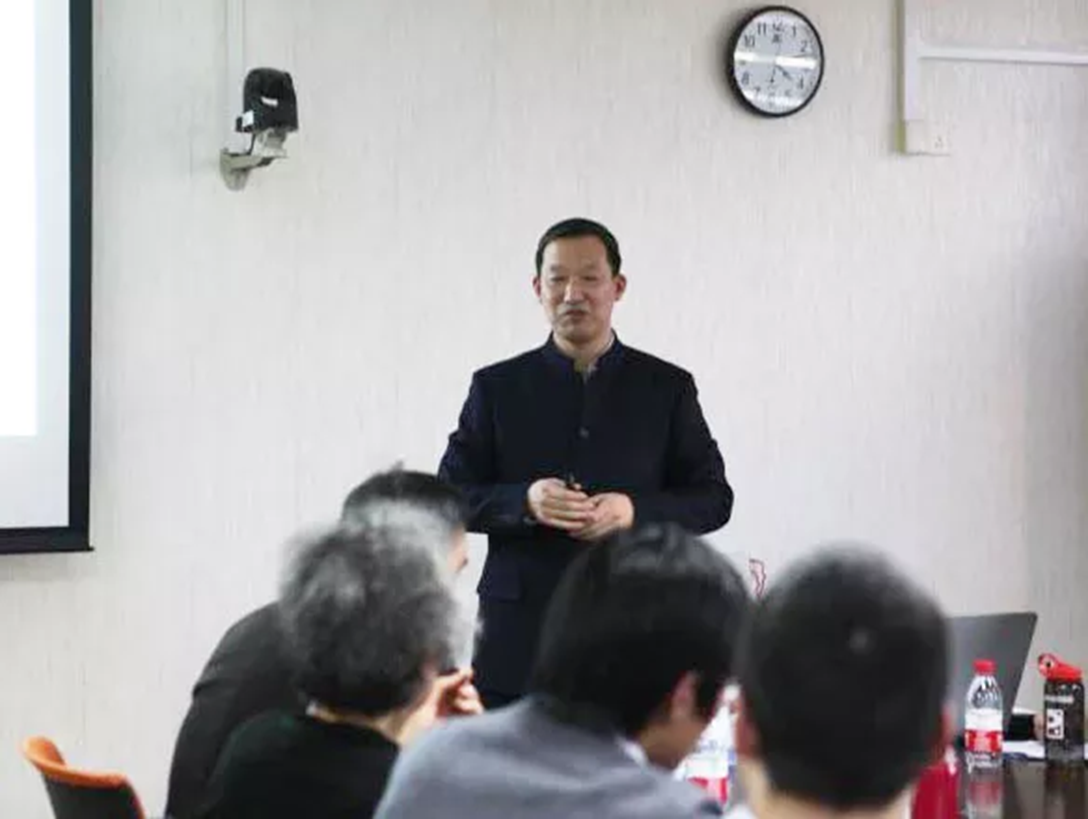
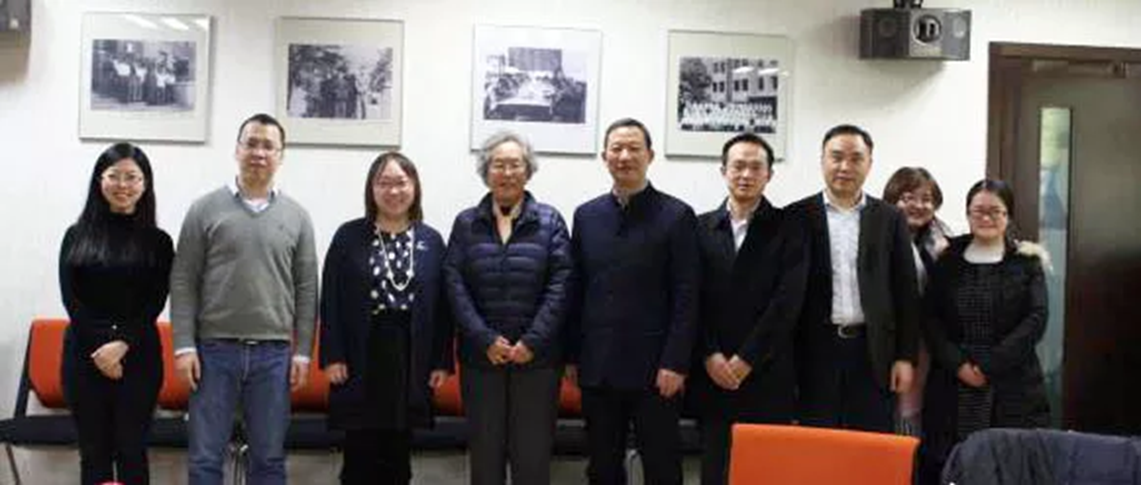
Professor He Qisheng from Peking University Law School delivered a keynote speech titled "Games and Trends of International E-Commerce Rules". Professor Wang Keyu from the Law School of Central University of Finance and Economics, Associate Researcher Li Qingming from the Institute of International Law of the Chinese Academy of Social Sciences, Professors Zhao Xiuwen and Du Huanfang from the Renmin University of China Law School, Associate Professors Zhang Jiyu, Ding Xiaodong and Zhang Wenliang, and Assistant Professor Zhu Ying from the Law School and the Renmin Law and Technology Institute of Renmin University of China attended and participated in the discussion. Before the forum officially started, Associate Professor Zhang Wenliang, Director of the Center for Global Cyberspace Governance of the Renmin Law and Technology Institute, introduced the significance of the forum theme and the participating guests. Professor Du Huanfang, Vice Dean of the Renmin University of China Law School, presided over this forum.

First of all, Moderator Professor Du Huanfang extended a warm welcome to Professor He.
Then the keynote speech officially began. Professor He first explored the definition of "e-commerce", focusing on whether it constitutes goods or services. He pointed out that the distinction matters because the WTO applies differentiated treatment to the two categories, which are regulated under the GATT and GATS respectively. He then analyzed the specific reasons behind disagreements over the classification of e-commerce within the WTO framework. He elaborated that the United States, as a major e-commerce power, advocates classifying e-commerce as ordinary goods to realize its expansion goals through zero tariffs; the European Union holds that e-commerce shall be categorized as services subject to GATS disciplines; developing countries maintain contradictory attitudes, hoping to introduce advanced technologies while safeguarding domestic interests. He further concluded that the core dispute lies in whether "zero tariffs" can be implemented. Afterwards, Professor He summarized the outcomes of WTO e-commerce negotiations and pointed out that the WTO’s current agenda runs counter to U.S. propositions.
On the basis of the foregoing overview, Professor He conducted a specific analysis of the international e-commerce regulatory regimes of the United States, the European Union and China:
1. The U.S. approach
Professor He illustrated that the TPP negotiated under U.S. leadership contains no definition of "e-commerce" but defines "digital products", with its fundamental principle being the "liberalization of trade in digital products" long pursued by the United States, which evidently includes several provisions targeting China.
2. The EU’s distinct stance
Professor He argued that the Transatlantic Trade and Investment Partnership (TTIP) does not contain China-specific provisions comparable to those in U.S.-led agreements, a feature tied to the EU’s consistent cultural values. While the EU recognizes the rationale for data localization, it prioritizes free trade and seeks to counter U.S. expansion by adopting higher standards such as consumer protection. Nevertheless, the possibility that the EU and the U.S. might reach agreements to contain China in the future cannot be ruled out.
3. China and international e-commerce regulation
Professor He introduced China’s current strength and legal rules in the field of e-commerce, and further pointed out two major development trends of e-commerce in the future: first, independent chapters governing electronic data have taken initial shape; second, the liberalization of data trade serves as a basic principle, which is also consistent with China’s demands.
Professor He summarized the above content. He held that the formulation of e-commerce rules is essentially a game of comprehensive national strength, in which all countries seek to maximize their own interests by formulating international rules in light of their national conditions. China is already a major consumer of data. Two questions remain for further reflection: whether China can grow into a major data resource power and how it will strike a balance between data liberalization and data localization; and whether the current bilateral or regional trade rules serve as explorations or obstacles to the formulation of global e-commerce rules.
Subsequently, the panel discussants including Professor Wang Keyu, Associate Researcher Li Qingming, Associate Professor Zhang Wenliang, Professor Zhao Xiuwen, Associate Professor Zhang Jiyu, Associate Professor Ding Xiaodong and Assistant Professor Zhu Ying commented on Professor He’s insightful speech and raised questions for exchange in sequence. Professor He also responded to the questions put forward by student participants.
Finally, Moderator Professor Du Huanfang once again expressed gratitude to Professor He for his excellent speech, thanked all panel discussants and students present for their active participation, and hoped that Professor He would come to the Law School and the Renmin Law and Technology Institute of Renmin University of China for more academic exchanges and sharing. The forum concluded successfully amid warm applause from all the audience.
Editor:Xu Liuya
Reviewer: Zhu Peiwen