
Professor Heinz Goddar of the University of Bremen, Germany, Delivers Lecture on Patent Law Issues Concerning Artificial Intelligence and the Internet
time:2019-05-18On the afternoon of April 10, 2019, Professor Heinz Goddar from the University of Bremen, Germany, was invited to the First Session of the Renmin University of China International Frontier Forum on Intellectual Property. The forum was held in Lecture Hall 602, Mingde Law Building, with the theme Patent Law Concepts and Issues Concerning the Promotion and Sharing of Innovation in the Era of Artificial Intelligence and the Internet of Things. It was co-organized by the Center for Intellectual Property Academy and Renmin Law and Technology Institute, Renmin University of China. This session was presided over by Professor Zhang Guangliang of the Renmin University of China Law School. Professor Guo He, Associate Professor Zhang Jiyu, and Attorney Wu Dajian, Partner of Yuhong IP Law Firm, participated as panel discussants. In addition, faculty members including Professor Yao Huanqing and Assistant Professor Zhang Yongfan attended and took an active part in thematic discussions.
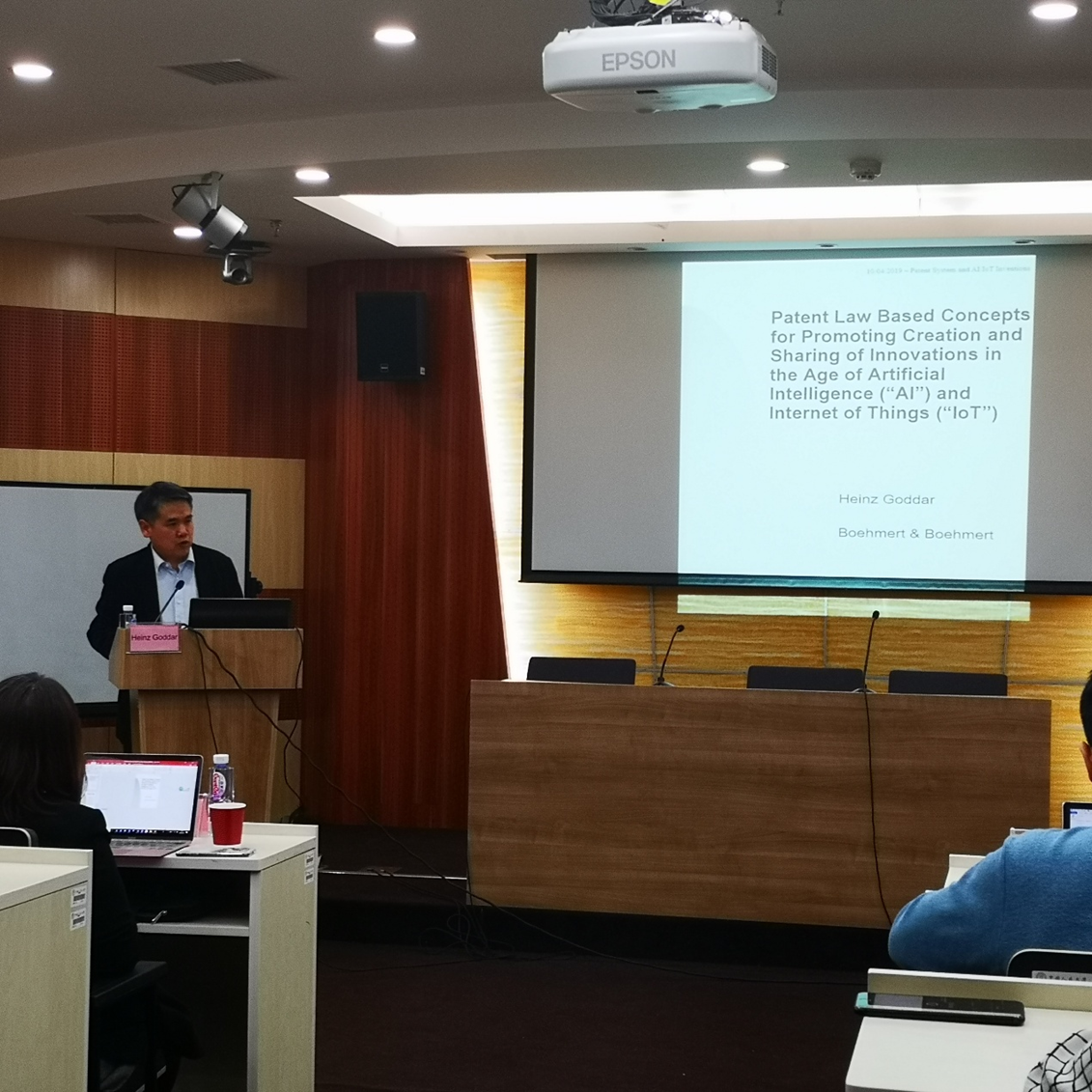
Professor Goddar noted that the costs generated by the patent system have attracted widespread attention in patent-intensive industries. While many experts propose resorting to antitrust law for regulation, Professor Goddar held that such dilemmas expose inherent defects within the patent system itself. He first put forward a metaphor of a "fence": the patent system is analogous to a fence framework built around innovation, which ought to contain a "gate". Patent holders may open this gate to interested third parties on mutually agreeable terms, thereby facilitating the sharing of innovative outcomes and preventing excessive monopolization.
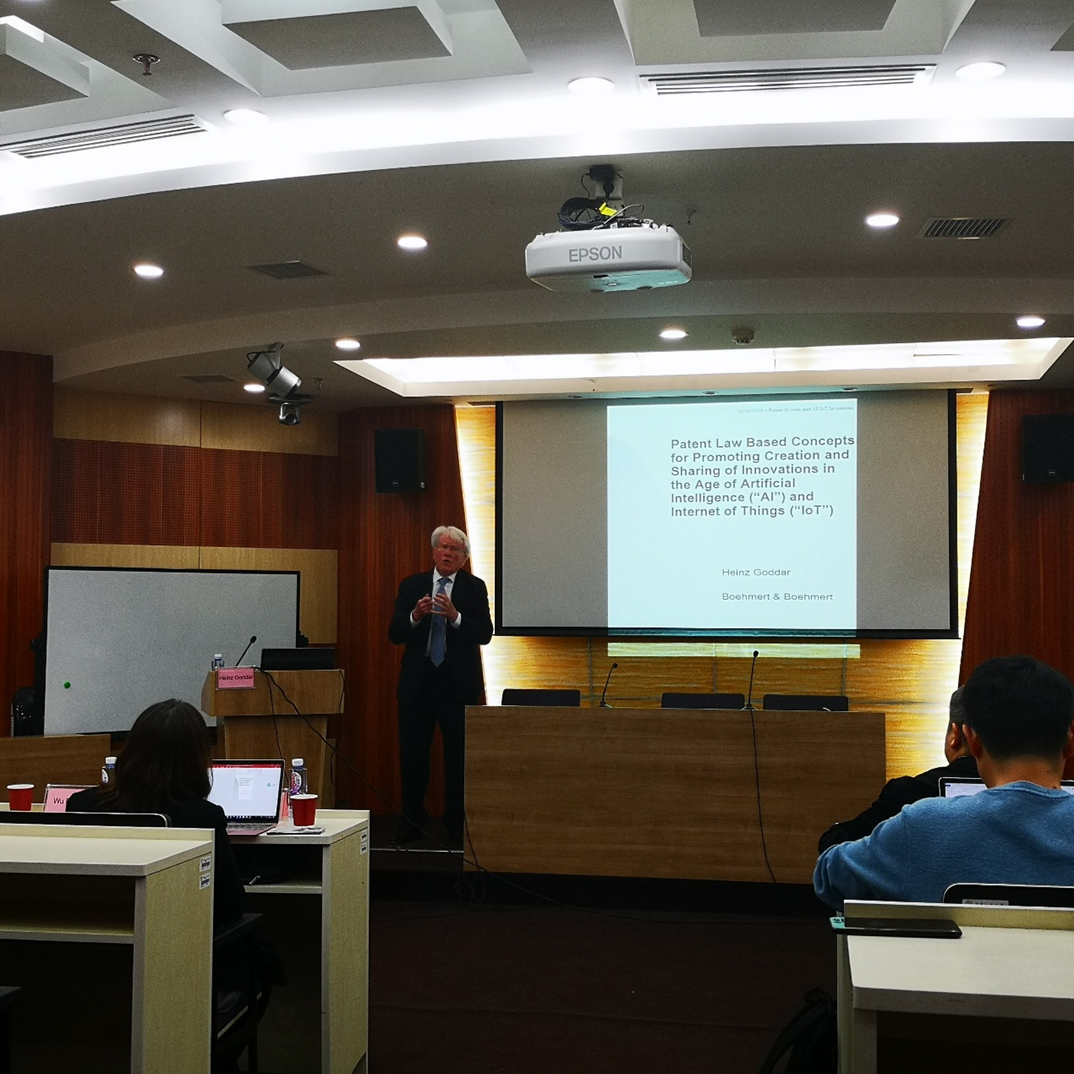
Professor Goddar then analyzed the essential institutional arrangements embedded in the patent system to safeguard public interests. First, improvers of patented technologies shall be entitled not only to build upon and improve existing patented inventions, but also to lawfully utilize the improved innovations. Second, in the context of Standard Essential Patents (SEPs), standard implementers, especially new market entrants, shall obtain licenses under FRAND terms to access the relevant markets.
Professor Goddar then narrowed his discussion to patent issues arising in the artificial intelligence sector and outlined core challenges, such as the protection of patents related to machine learning, and whether data providers should be vested with certain statutory rights over patents granted after algorithms are trained using their data. He further analyzed how AI-related developments may alter the patent system’s impact on innovation.
After Professor Goddar finished his presentation, Attorney Wu Dajian, Professor Guo He, Associate Professor Zhang Jiyu and other faculty members shared their interpretations and supplementary insights on the above content. The participating scholars conducted a highly meaningful academic exchange in this specialized field.
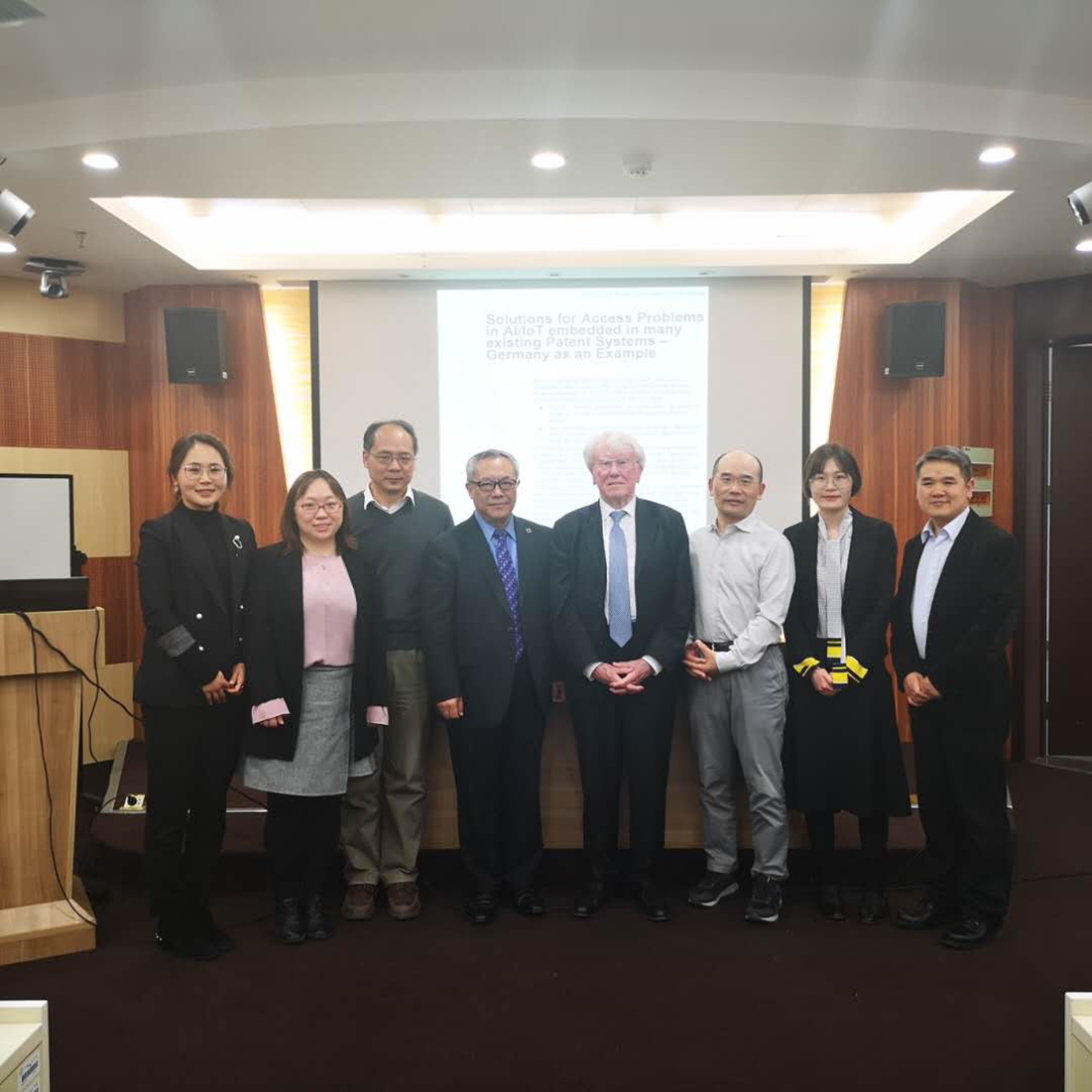
After the lecture, Professor Guo He presented Professor Goddar with a commemorative poster for the event and a certificate of honor. Professor Goddar then took group photos with all attendees and expressed his gratitude once again to all participating faculty and staff of the forum.
Editor:Xu Liuya
Reviewer: Zhu Peiwen