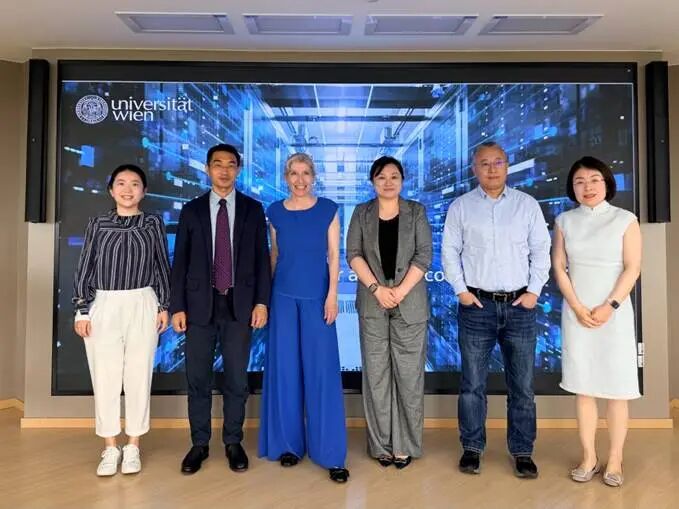
Lecture Review|Christiane Wendehorst: Data Transactions and Data Rights: Toward a Unified Private-Law Framework for the Data Economy
time:2026-09-24On the morning of 22 July 2026, an academic lecture jointly hosted by Renmin University of China Law School, Renmin law and Technology Institute, was successfully held in Room 708 of the Mingde Law Building. The lecture, entitled “Data Transactions and Data Rights: Toward a Unified Private-Law Framework for the Data Economy,”featured Professor Christiane Wendehorst of Civil Law at the University of Vienna, and a Co-Reporter of the ALI-ELI Principles for a Data Economy, as the keynote speaker. Professor Xiong Bingwan of the Renmin University of China Law School moderated the lecture. Professor Yao Jia, the School of Law, University of Chinese Academy of Social Sciences, Associate Professor Wu Zhicheng of Renmin University of China Law School, and Assistant Professor Bao Xiaoli of Beijing Institute of Technology School of Law served as discussants.
Lecture Review:
In her presentation, Professor Wendehorst first introduced the background and positioning of the Principles for a Data Economy: Data Transactions and Data Rights (hereinafter the Principles), which was jointly developed by the American Law Institute (ALI) and the European Law Institute (ELI) beginning in 2018. The Principles are conceived as soft-law reference guidelines, intended to offer academic guidance for judicial adjudication, commercial contracting and legislative improvement in jurisdictions including the United States and Europe. Meanwhile, the Principles set clear boundaries of application: they focus exclusively on big data that can circulate as an asset. They do not involve established legal regimes such as governing personal-data protection, intellectual-property rights and trade secrets, and exclude certain special categories, such as software and crypto-assets , from their scope.

The Principles consist of five parts, among which Data Contracts, Data Rights, and Third-Party Effects of Data Activities constitute the core. A proposed chapter on data asset security was discarded owing to profound divergences between European and United States secured-transaction regimes. Mapping the full spectrum of stakeholders in the data-economy and centring on data holders (controllers), the instrument acknowledges that multiple parties can jointly produce data, laying the subject-related foundation for rules on co-generated data.
In the chapter on Data Contracts, the Principles establishes two categories of contracts: data-supply-and-access contracts and data-service contracts. Fiduciaries in data services may retain and use data for their own purposes only to improve service efficiency without harming the principal’s lawful rights and interests; authorization is required in all other circumstances.
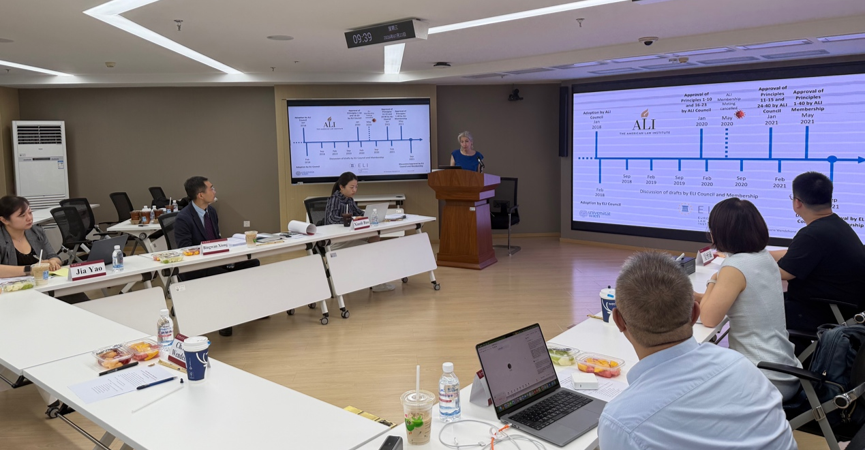
At its foundational level, the Principles abandons the established framework of exclusive dominance under traditional property law and adopts the test of “factual possession plus wrongfulness of conduct”: parties in factual possession of data may dispose of it freely, and conduct is unlawful only when it infringes intellectual-property rights, personal-data rights, breaches contracts, or involves unlawful data acquisition. A core innovation in this part lies in the rules for co-generated data. Where multiple parties jointly create data, whether a party is entitled to the four aforementioned rights is determined comprehensively by the proportional contribution of each participant, together with legitimate interests of data controllers and third parties, bargaining power of contracting parties, and public-interest considerations. In principle, relevant parties have no right to claim data-derived gains; such a right arises only if the party’s contribution to data generation is unique and irreplaceable.
For multi-level data circulation, the Principles establishes a complete third-party-protection regime. Contractual restrictions under the original agreement must accompany the data as it is transferred downstream. Aggrieved parties may bring direct claims against downstream recipients who know of violations or fail to conduct due diligence. Meanwhile, embodying the spirit of the principle of proportionality, the Principles stipulates that upstream suppliers cannot hold indirect data recipients liable merely for trivial, non-material breaches.

Professor Wendehorst observed that since its publication, the Principles has attracted broad international attention and exerted influence on the EU Data Act and the Default Rules for Data-Provision Contracts drafted by UNCITRAL Working Group IV (Electronic Commerce). She called for enhanced academic exchanges with Chinese scholars to conduct comparative research and explore mutual lessons between the institutional design of the Principles and China’s foundational data institutions, especially its data-property-rights regime.
Panel Discussion
Moderator Professor Xiong Bingwan thanked Professor Wendehorst for her comprehensive presentation, which greatly facilitates an in-depth understanding of the core of the Principles. He pointed out that despite many shared priorities between the Principles and China’s foundational data institutions, as well as its enlightening insights for practical case resolution, divergences remain in analytical framework construction and approaches to resolving interest conflicts among different stakeholders. Professor Xiong further commented on the model differences and future trajectories of data-property-rights construction and solutions adopted by China, Europe, the United States and UNCITRAL.

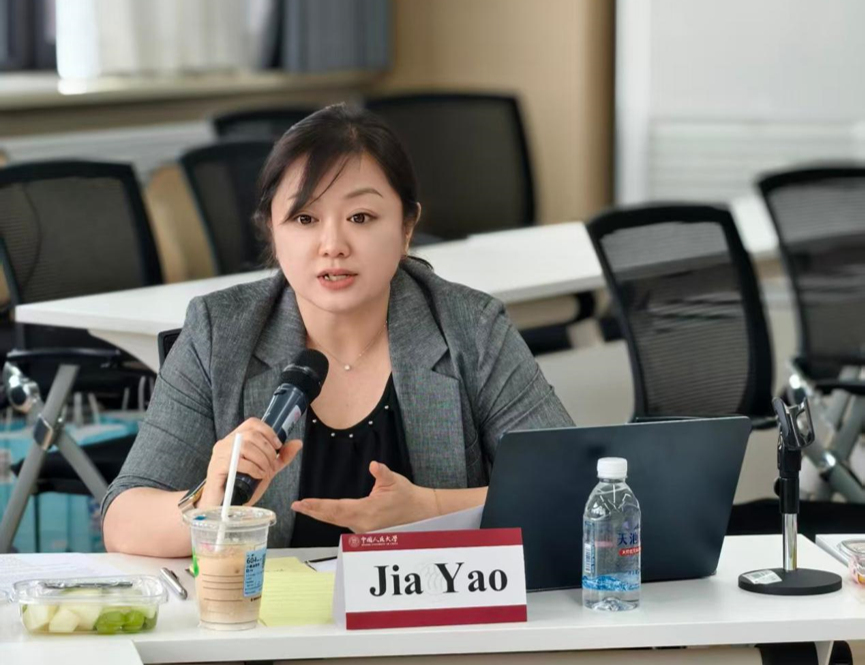
In her comments, Professor Yao Jia from the School of Law, University of Chinese Academy of Social Sciences first pointed out that the Principles have significantly contributed to fostering basic consensus on data-law rules across jurisdictions. She conducted an in-depth comparison between China’s data-law regime and the Principles from the perspectives of the definition of “data”, the substance and entitlements of data-related rights, and data-governance philosophies.
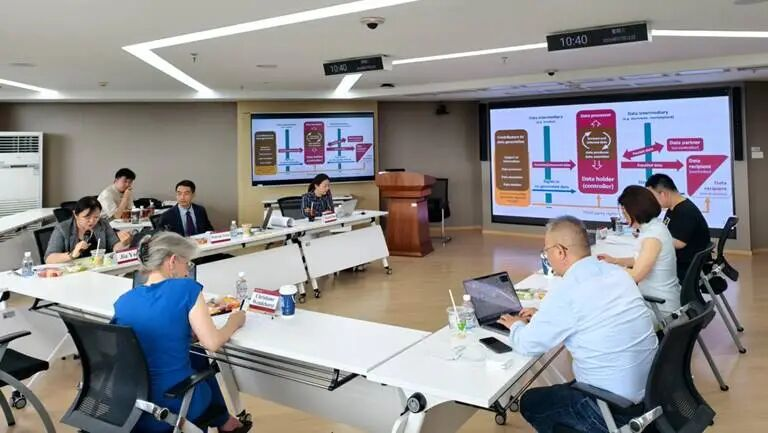
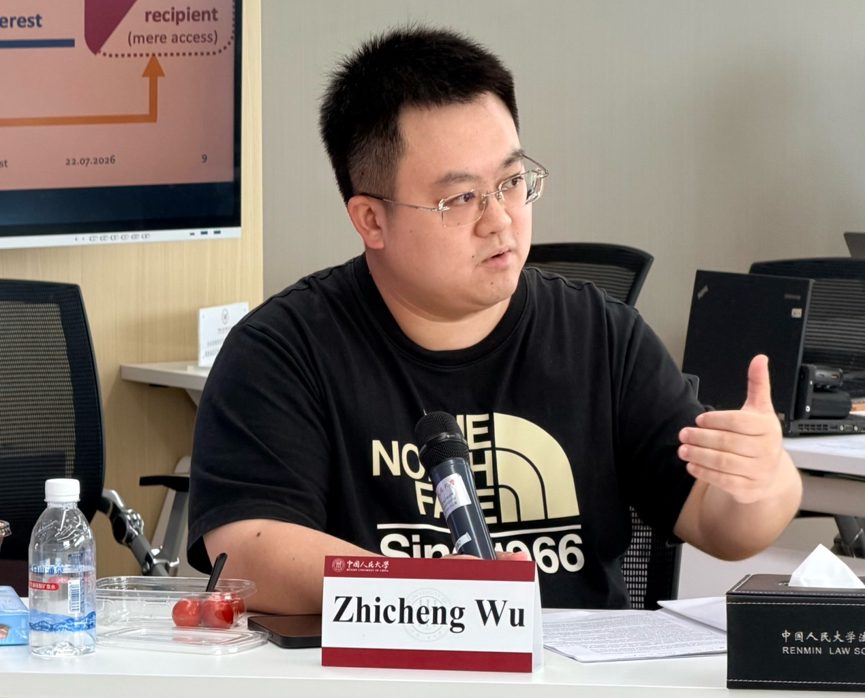
Associate Professor Wu Zhicheng from the Law School of Renmin University of China delivered his comments focusing on data-trust contracts under the Principles. He noted that the Principles demonstrates a strong orientation toward protecting data controllers or principals, which echoes the principal-centered idea and is highly consistent with the principal-protective stance of China’s Trust Law. Nevertheless, the Principles endow principals with an unconditional unilateral right of termination even where separate beneficiaries exist. While this rule fully safeguards principals’ interests, it appears inadequate for the protection of beneficiaries. Professor Wendehorst concurred with Associate Professor Wu’s observation and indicated that relevant improvements would be considered in subsequent revisions.
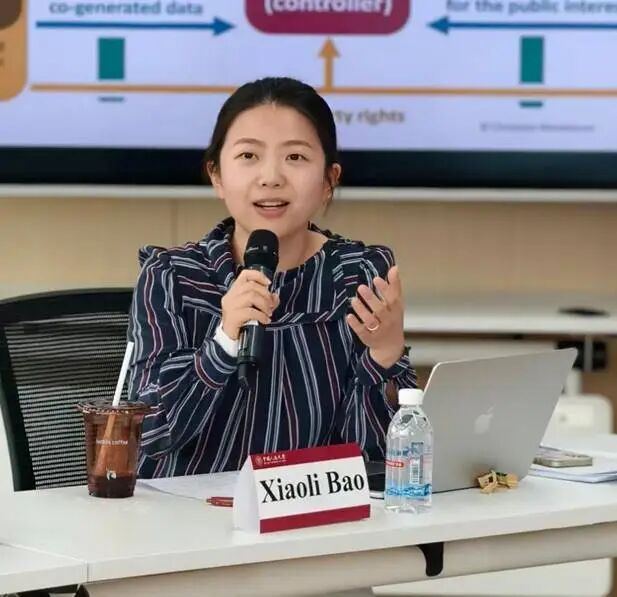
Assistant Professor Bao Xiaoli from the Beijing Institute of Technology School of Law made a systematic comparison between the Principles and Chinese policy documents such as the Twenty Provisions on Data. She analysed their similarities and differences in terms of positioning, legal effect, data categorisation, original acquisition of data, typology of data contracts, and third-party protection. She pointed out that the comprehensive provisions on contract typology and third-party protection in the Principles are worthy of reference for Chinese legal research. Thereafter, Professor Wendehorst and Assistant Professor Bao further discussed a series of issues including the identification of original data holders, allocation of data-derived gains, and judicial practice concerning data-related disputes.

In the end, audience members raised questions and held thorough discussions with Professor Wendehorst concerning the criteria for data-contract classification under the Principles, the determination of entitlement shares for contributors to co-generated data, and the transaction-facilitating function of data-property-rights institutions.
The lecture concluded successfully amid warm applause.